Boxes are always measured andwritten as Length x Width x Height (L x W x H). Length is the longest horizontal side and width is the shorter horizontal side. Height is how tall the box stands.
For custom packaging orders, always measure inside dimensions not the outer footprint, and add at least 1/2 to 3/4 inch of clearance per side for product protection.
The one rule that trips people up most often is measuring outside the box and wondering why the product doesn’t fit. Always use inside dimensions.
Getting box dimensions wrong by even half an inch can push you into a higher DIM weight tier and cost you thousands in shipping fees annually. I’ve seen it happen more than once. Brands pour real resources into product development, but rush the packaging spec and pay for it on every shipment.
This guide covers everything you need to know about measuring boxes correctly, inside vs. outside dimensions, how a packaging dieline works, and what dimensional weight actually does to your shipping costs.
What Are Box Dimensions? (L x W x H Explained)
Box dimensions refer to the internal usable space of a box in three measurements: length x width x height. The length is the longer of the two base measurements, width is the shorter, and height is the vertical distance from base to lid when the box is closed.
There’s a distinction that matters when you’re ordering custom packaging, and that’s inside dimensions vs. outside dimensions.
Inside dimensions are the usable product space. Outside dimensions include wall thickness. For example, on a standard double-wall corrugated board, each wall is about 3/16 inch thick, so you lose roughly 3/8 inch of usable space across both walls.
Manufacturers use inside measurements, while carriers measure outside dimensions for dimensional weight billing.
How Box Dimensions Are Labeled
Dimension
Inside dimension – Provide to fabricator
Outside dimension – Carriers scan for dimensional weight
L
Length – Longest side
Usable product space. Always use this when ordering.
Include wall thickness (typically 1/8” to 3/16” per wall on single-wall corrugated boxes, depending on flute type). Carriers measure this for DIM.
W
Width – Shorter base side
H
Height – Base to closed lid
Why Accurate Measurements Matter: Accurate measurements affect shipping charges, product protection, material usage and sustainability, and customer perception when opening the package.
How to Measure a Box Correctly
With the box closed, measure each dimension from inside wall to inside wall. Measure L and W along the base footprint. Measure H from the base floor to the underside of the closed lid.
Common Measurement Mistake: Most people measure external box dimensions and wonder why their product doesn’t fit. Always measure the insidedimensions when ordering custom packaging, as custom packaging manufacturers generally rely on internal box measurements. Girth is calculated as 2 x (width + height) and is commonly used by shipping carriers to determine package size limits. External box dimensions measure the finished package and do not account for the thickness of the corrugated material, meaning the internal usable space is always slightly smaller.
Aside from measuring boxes correctly,our guide can help you identify common mistakes when designing custom boxes so your packaging stands out and remains functional.
How to Measure Your Product for Custom Packaging
You can’t just eyeball a box size. Measuring your product correctly before requesting a quote is the most reliable way to avoid costly sampling rounds and production delays. Here’s how to do it.
Step-by-Step Process
Measure your product’s length, width, and height at its widest points. Consider potential variance per dimension and round up to the nearest whole inch.
Add clearance for protection. For most products, add 1/2 to 3/4 inch per side. For fragile items, go up to 1 inch. That space accommodates padding or custom inserts.
Account for movement during shipping. A product that shifts inside the box can arrive damaged, even if the box is intact, which is why snug packaging reduces the need for excessive void fill and protects the product better.
Tools You’ll Need
Measuring tape, ruler, or digital calipers
A flat surface
Sample packaging if available or if it’s a reorder
Pro Tips
Measure your product exactly as customers receive it, including caps, handles, sleeves, or attached accessories.
Account for fragile items as these usually require more clearance than rigid products.
Example: Candle in a Custom Box
Say you have a cylindrical candle that sits inside a 3″ x 3″ x 6″candle box. Here’s the sizing math:
Product dimensions: 3″ L x 3″ W x 6″ H
Add 3/4″ clearance per side (1.5” total per dimension): 3 + 1.5″ = 4.5″ L; 3 + 1.5″ = 4.5″ W; 6 + 1.5″ = 7.5″ H
Round up to the nearest whole inch: 5″ x 5″ x 8″ inside dimensions
That’s the inside dimension you’d provide on a custom order forcandle packaging.
Once those measurements are confirmed, the provider creates a packaging dieline scaled to exactly those box measurements.
Standard Box Sizes vs. Custom Box Sizes
Businesses oftenchoose between off-the-shelf packaging and packaging with custom box sizes based on product needs, volume, shipping, and how much the packaging itself matters to your brand.
Standard Sizes
Standard boxes come in predefined dimensions that many products fit reasonably well. They have faster lead times and cost less per unit at low quantities. Standard shipping boxes typically range from 4 x 4 x 4 inches to 24 x 18 x 18 inches and are measured in the industry-standard order of Length x Width x Depth (L x W x D). Box dimensions are optimized for courier requirements, stacking efficiency, and shipping costs, with most carriers imposing a 70-pound maximum weight limit, 32 ECT corrugated boxes commonly used for shipments up to 65 pounds, and dimensional volume calculations and a manufacturing tolerance of +/-⅛ inch helping ensure compliance with shipping standards.
Custom Sizes
Custom box dimensions are engineered around your specific product. They take longer and cost more upfront, but theoptimized fit can reduce shipping costs and eliminates the void fill that makes a box feel cheap. They supportcustom inserts, full branding, and structural features.
Key Differences
Here’s a direct comparison of standard box sizes and custom box dimensions:
Criteria
Standard Box
Custom Box
Cost per unit
Lower at low quantities
Lower at higher volumes; one time cost for dieline
Lead time
Faster (in-stock)
Longer (production run required)
Branding
Limited or none
Fully branded, any artwork or finish
Shipping efficiency
May be oversized for your product
Optimized fit reduces DIM weight charges
Insert compatibility
Limited; often requires void fill
Inserts designed to exact product spec
Protection
Adequate for general use
Tailored to product form and fragility
Note: “Standard sizes” in any packaging guide are representative examples, not fixed industry standards. Most shipping boxes are built to custom dimensions. Treat size charts as guides and not absolute specs.
What Is a Dieline in Packaging?
In a nutshell, your packaging dieline is like the blueprint for the finished box. It’s used to guide how your packaging is cut, folded, glued, and printed.
Definition of a Dieline
A packaging dieline is the flat 2D template that shows every cut, fold, and print zone of a box before manufacturing. When a producer scores and cuts a flat sheet to the dieline spec, it folds into the finished 3D box.
Key Elements of a Dieline
Cut lines. Usually shown in black, these mark exactly where the die-cutting machine will slice through the material. These define the outer edge of your finished box.
Fold lines. Shown in red, these indicate where the board gets creased to form the 3D structure. Fold lines show you where panel edges will appear on the finished box.
Bleed area. A strip of roughly 1/8 inch (3mm) beyond the cut line. Artwork extends into the bleed so that any slight shift during production doesn’t leave a white edge on the finished box. For context, if your artwork stops exactly at the cut line, even a 1mm cutting tolerance will expose an unprinted edge.
Safe zone. The area inside the cut lines where text, logos, and critical design elements should stay. Anything too close to the cut line risks being trimmed during die-cutting.
Why Dielines Are Important
Your packaging dielines help provide accurate protection for your products. These also prevent printing errors, such as trimmed logos or misaligned artwork, and reduce the risk of structural issues, preventing mis-assembly or seam failure under load. They’re valuable for prototyping so you can thoroughly test your packaging’s quality and performance.
How Dielines Work in Custom Packaging
A typical workflow looks something like this: concept, dieline, prototype, production.
Manufacturers build the dieline to the confirmed inside dimensions. Designers place artwork on it, respecting the bleed and safe zone. A physical prototype is tested with the actual product before the full run is approved. Dielines are typically delivered as Adobe Illustrator (.AI) or PDF files in CMYK with separate layers for cut lines, fold lines, and artwork.
How Box Size Affects Shipping Costs
This is the part most brands don’t realize is costing them money.
Dimensional weight or DIM weight is a pricing method used by major carriers, including UPS and FedEx, where the space a package occupies matters as much as how much it physically weighs.
Before 2015, carriers charged based entirely on actual weight. Then FedEx, UPS, and USPSintroduced DIM weight pricing across all shipments to account for the fact that large, lightweight packages take up truck and aircraft space regardless of how little they weigh. Today, if your DIM weight is higher than your actual weight, you get billed at the higher number,explained FedEx.
Dimensional Weight (DIM Weight) Explained
Dimensional weight is a carrier pricing method where the billable weight is based on cubic volume. Carriers determine whichever is higher, actual weight or DIM weight, and charge you that.
Formula: DIM weight (lbs) = (L × W × H in inches) ÷ DIM factor
FedEx (U.S. Puerto Rico, and international) andUPS domestic: DIM factor 139.USPS: 166 (packages over 1,728 cu. in. only). Result rounds up to the nearest whole pound.
Why Oversized Boxes Cost More
Take a 12 x 10 x 6-inch box shipped via FedEx, with an actual product weight of 2 lbs.
Cubic size: 12 x 10 x 6 = 720 cubic inches
DIM weight: 720 / 139 = 5.18 lbs., rounded up to 6 lbs.
Carrier bills you for 6 lbs., not 2 lbs. A 3x markup on billable weight.
So, if you ship 10,000 units a year, you’re paying for 40,000 extra billable pounds that don’t reflect your product’s actual weight. Whatever your negotiated rate is per pound, that markup is still an avoidable cost.
Optimization Tips
Use snug-fit packaging, meaning the smallest box that can still protect your product
The majority of retail packages that you’ll see lining the shelves of any brick-and-mortar store – from cereals, milk, cosmetics – come in carton boxes. While these are one of the most well-known and diverse box types available, they aren’t intended for shipping.
For our purposes below, we’ll be considering shipping needs as well. And when discussing shipping boxes, the primary package type being referenced is the corrugated box.
Most often constructed of three layers – two layers of fiberboard (container or linerboard) surrounding a fluted corrugated medium (a wavy piece of fiberboard) that helps give the box its strength and durability.
Consider the difference between a cereal box (a single sheet of paperboard) versus a basic moving box (the corrugated box). It’s easy to see why the latter is favored for shipping and fulfillment.
These corrugated boxes can be used for all manner of goods – everything from toys and electronics to foods and appliances. Even hazardous materials ship in the corrugated box if afforded the right exterior thickness and interior packing material.
Here’s how to select the right box size based on factors like product and packaging type.
Balancing Fit, Protection, and Cost
Asmaller box can reduce dimensional weight and material use, but products still need enough room for cushioning or inserts. If the fit is too tight, protective materials may not work as intended or could place pressure on fragile items.
If the box is too large, products can shift during shipping and shipping costs may increase. It can also create overpackaging problems, leading to unnecessary waste that can put off consumers.Packaging Gateway reported that 37% of North American shoppers have put off eCommerce purchases because of excessive or unsustainable packaging.
The best approach is to size the box around the product and its protective packaging so your customers receive an item that arrives safely and feels thoughtfully packed.
Based on Product Type
Fragile items: 1–1.5 inches clearance per side with structured foam or custom inserts. Extra space without structure just gives the product room to shift.
Heavy products: Corrugated with appropriate burst-strength rating. Undersized boxes fail at the seams, not the corners.
Multi-item packaging: Measure the combined footprint with dividers in place, not each product separately.
Based on Packaging Type
Mailer boxes: The right fit matters and the box is part of the unboxing experience.
Folding cartons: Dimensions need to match the retail shelf planogram or slot spec.
Corrugated boxes: Built for shipping and slightly more clearance, acceptable when heavy padding is used.
The advantages of corrugated boxes for shipping include:
High durability
Lightweight
Relatively low shipping costs
Reusable
Good protection by itself, outstanding when paired with void fill
Comes in practically any shapes or sizes of box
Corrugated boxes come in four different builds. They include:
Single Face: A single sheet of fiberboard is glued to a single fluted corrugated medium. Most often, this form is utilized as a heavy-duty packing material and not in the construction of an actual box.
Single Wall: This form is your basic everyday corrugated box – the two layers of fiberboard glued on either side to the fluted corrugated medium. Single wall corrugated boxes are the standard for the vast majority of shipping needs due to their strength and efficient material and cost optimization.
Double Wall: With an additional layer of protection – three sheets of fiberboard alternated with two fluted corrugated mediums – double wall boxes significantly increase a box’s durability and protection. Although it offers increased protection for bulky or heavy items like electronics, it also adds to your shipping costs.
Triple Wall: As you might have guessed, a triple wall corrugated box is some heavy-duty stuff. It adds another layer of fiberboard and a corrugated medium to the build. The strength is on par with wooden crates. Do you need to ship industrial or medical equipment, big appliances, or large panes of glass? This is what you use to do it.
Taking the construction a step further, there are five different fluted corrugated mediums. The flute variances are based on flutes per square foot and thickness. You can combine different flute styles in custom packaging to adjust dimensional weight, the thickness and durability based on actual weight of what you’re shipping.
A-Flute: 33 flutes per square foot and 3/16 inch thickness. Ideal for shipping fragile items.
B-Flute: 47 flutes per square foot and 1/8 inch thickness. Ideal for items such as canned goods or for use as interior packing dividers.
C-Flute: 39 flutes per square foot and 5/32 inch thickness. Ideal for basic shipping needs and is the most common flute size.
E-Flute: 90 flutes per square foot and 1/16 inch thickness. Ideal for smaller fragile items and high-quality printing (think cosmetics packaging or for small glass products).
F-Flute: 125 flutes per square foot and 1/32 inch thickness. Ideal for small retail packaging items.
Based on Box Size
It can be a taxing affair to count all of the ways you can shape a box.
Depending on where you look, you can choose from between 1,500 and 2,000 different options. That’s assuming you don’t have any custom packaging needs.
We’ll wait while you quietly utter “wow” to yourself.
In an effort to keep the details uncomplicated, let’s focus our attention on the most common box forms. Trust us, it’s still a lot.
There are actually six basic box styles – Slotted, Telescope, Rigid, Folders, Self-Erecting, and Interior Forms. Here’s a breakdown of some of the most widely used box styles:
Slotted Boxes
Constructed from one single piece of corrugated fiberboard, these boxes are “slotted to allow for easy folding and assembly. This style of box is the most popular and widely used.
Regular slotted container (RCS): Regular slotted containers are the most commonly used corrugated shipping box. They have two sets of flaps, each being half the width of the box, which meet in the middle. You’ll need tape to close it.
Half slotted container (HSC): Similar to the regular slotted option except that there’s only one set of flaps instead of two.
Overlap slotted container (OSC): This box resembles the regular slotted box, but the two sets of flaps are of equal length, that provides an overlapping enclosure (roughly about an inch to an inch and a half more than the regular slotted box) instead of ones that meet in the middle. You’ll commonly see these boxes fastened with staples instead of tape.
Full overlap slotted container (FOL): Like the overlap box, all flaps have an equal length but measure the entire width of the box. Not only are these packages more secure, but they stack easier due to a seamless flat bottom when closed. Both the overlap and full overlap are more expensive to procure.
Slotted boxes also feature center slotted varieties with inner flaps with equal sides that meet and other flaps with various degrees of width side overlap. The snap-lock bottom or 1-2-3 bottom offer a quicker set-up than a regular slotted container and can feature a top tuck or regular slotted enclosure.
There’s also a bellow style top that includes a folding top instead of standing side flaps to secure the box’s top portion.
Other Box Styles to Consider
While slotted boxes are the most popular form of box for shipping, the other styles we mentioned garner plenty of use. These include:
Telescope Boxes: Telescope boxes include two separate pieces – a top and a bottom – with one fitting over the other. The main styles include a full telescope design style container (FTD) option formed from two slotted pieces that serve as trays that fit inside each other. The box design style container with cover is similar to the above. Only the top portion or cover of the box does not extend all the way down the bottom portion of the container. Imagine a traditional two-piece shoebox. Other variations include the double cover container (DC), interlocking double cover container (IC), and the full telescope half slotted container (FTHS).
Rigid Boxes: Rigid boxes, also called bliss boxes, feature two same size end panels and a body that folds around to create two side panels and a seamless bottom. Once the joints of the box are sealed, the box is considered rigid.
Folders: Folders are just that, single pieces of corrugated fiberboard that fold to create a seamless bottom with flaps coming together at the top of the box. Two variants include the one-piece folder (OPF) and five-panel folder (FPF). Another type of folder includes trays that fold and join together to create sturdy containers featuring both a cover or an open top. Other folders feature air cells (flaps that fold over to create additional protection), wraparounds that fit directly around a product, or a high wall or display tray.
Self-erecting: Self-erecting boxes feature top panels typical of a regular slotted container with a pre-glued auto bottom. There’s also a self-erecting six corner tray that features a telescope top.
Interior Forms: Finally, interior forms are corrugated pieces that serve as interior packing forms. Styles include dividers, liners, pads, partitions, or tubes. Interior forms help further strengthen corrugated boxes and protect and cushion fragile products. Although the added materials can increase costs, custom interior forms can also enhance your packaging presentation and provide customers a wow-worthy unboxing experience.
Phew. Bet you didn’t know there were so many choices for a lowly box. And the list could go on and on. We haven’t even touched on packaging design. But this gives you an idea of some of your options.
When deciding on which box size is best for your products, the cost of custom boxes is important, but also keep in mind how long it takes to assemble boxes.
You may pay more upfront for already assembled boxes, but it might be worth it if you don’t have time to devote to folding the boxes together.
Popular Box Dimensions for Product Packaging
Popular box sizes vary by industry, but many businesses rely on standard dimensions for efficiency and cost savings. Common sizes include small tuck-end boxes for cosmetics (e.g., 2″ x 2″ x 4″), medium mailer boxes for eCommerce (e.g., 9″ x 6″ x 3″), and larger shipping boxes (e.g., 12″ x 9″ x 4″) for bulkier products.
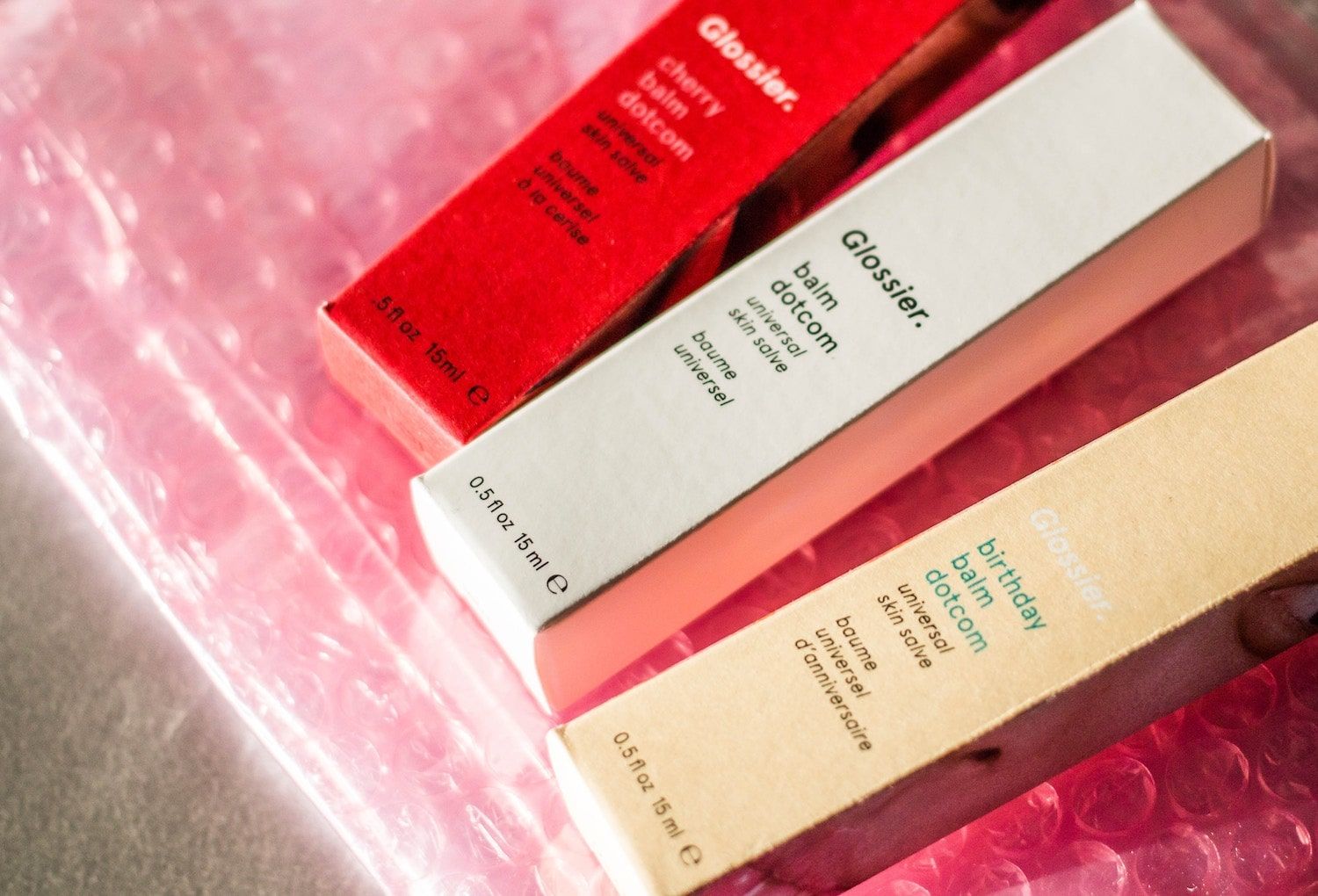
2″ x 2″ x 4″ – lip balm, serums, small cosmetics
4″ x 4″ x 2″ – candles, accessories, small gifts
6″ x 6″ x 3″ – apparel, mugs, small electronics
9″ x 6″ x 3″ – subscription boxes, DTC packaging
12″ x 9″ x 4″ – multi-item kits, bulkier products
Custom sizing is also common for unique product shapes
Refine Packaging helps brands choose the perfect dimensions based on product weight, presentation, and shipping needs. We offer custom box sizing at no extra cost, plus design support and dielines to ensure everything fits and looks professional.
Unlimited custom box size options
Expert sizing recommendations for your industry
Free dielines and design help
Low MOQs and fast turnaround
Great for eCommerce, retail, and subscription brands
How Packaging Fill Impacts Box Dimensions
Boxes and shipping are more than just, well, boxes and shipping.
Rarely is an item just flung in a box and shipped off. What goes inside your box is also important. And we’re not talking about the products you ship. Not directly anyway.
Void or infill is an integral part of the box-sizing process. Not accounting for how you plan to pad and protect the products you ship can lead to ordering improperly sized boxes, utilizing more materials than is necessary, or increased packaging and shipping costs. Double check your padding with measuring tape or a ruler to avoid having an incorrect size of box.
Haphazardly piecing together your packaging may also result in dissatisfied consumers either from a less than desirable unboxing experience or damaged goods. Having packaging that’s social media shareworthy is one of your strongest marketing tools, don’t risk losing it with damaged products.
Let’s explore a handful of popular options for void fill and how they can impact the box dimensions and style that you choose.
Packaging Paper: Arguably, the most widely used void fill material, packaging paper is excellent for filling space and general product protection during shipping. The two main types of paper include Newsprint and Kraft. Considering both are ultimately just a sturdier form of paper, neither option will have a significant impact when accounting for box sizes. You can also use recyclable paper options.
Bubble Wrap: A go-to for many brands, bubble wrap is great because, similar to packaging paper, it’s perfect for filling voids and keeping items safe. It does prove burdensome to store (and DIY options require the purchase of a $4,000 air filling machine). It isn’t the most environmentally-friendly choice for packaging. But it won’t alter your box measuring requirements.
Corrugated Paper: The environmentally friendly alternative to plastic bubble wrap, corrugated paper is what’s left of the corrugated box making process. That excess makes for superior material both as basic void fill and protection or for a more appealing boxing presentation. Supremely flexible, modest amounts won’t have an impact on your box measurements. However, incorporate it as a stylish display in smaller packaging (it’s excellent for creating a “nest” to cradle items), and you might need to increase your box size.
Inflatables: No, we’re not talking balloons here. Instead, inflatables, also called air pillows, offer some of the best shipping cushioning available. The downside, though, is that due to their looseness within a box, it can lead brands into buying one size fits all boxes. Not great if your aim is to closely match your product, boxing and shipping needs. In addition, while they offer a small storage footprint (they come uninflated), they do require a pricey air filling machine.
Custom Inserts: Although it might add to your packaging and shipping costs, customized inserts are excellent for protecting and enhancing the unboxing experience. It will take some extra leg work to get your box measurements and style just right. You’ll need to account for the size of the product, how it will fit within the insert, and how the insert will fit within the box. It can be time-consuming and requires some planning, but it’s well worth the effort.
Crinkle Paper: Yep, it’s basically shredded paper that’s crinkled up. Although it’s a bit messy, this form of custom packing makes for a fancy presentation, offers adequate protection for small or moderately fragile items, and will work within practically any box dimensions you choose. That said, we’ll reiterate, it can create a mess, so it’s best used in smaller boxes and doses.
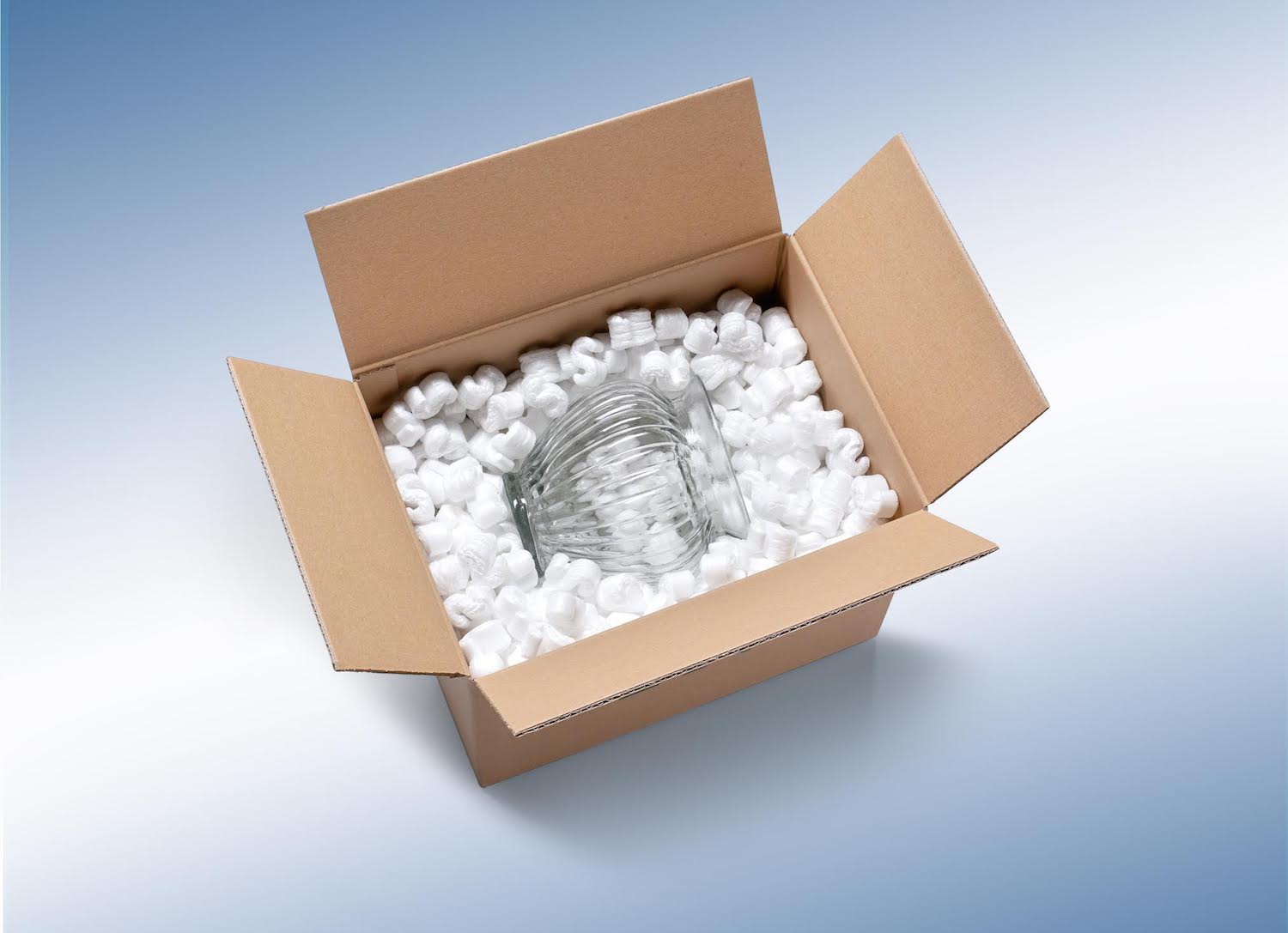
Packing Peanuts: Speaking of messes, packing peanuts is a stalwart of the shipping business. They will work for any size box, especially large ones with a lot of void to fill, but they’re not at all good for the environment. We suggest you steer clear of these.
Biodegradable Starch Peanuts: If, however, you like the idea of peanuts and packing and filling whatever box size you want with them, we suggest you go green. Biodegradable starch peanuts are essentially the same as regular packing peanuts, only eco-friendly. These are awesome and will be appreciated by your customers. Because, seriously, who wants to drive to a UPS store to recycle old styrofoam peanuts?
Double Boxing: Similar to custom inserts, double boxing creates a package within a package effect. In theory, this does aid in protecting items within the product box. Still, you will need to account for securing the smaller product box within the larger box for shipping. Unless it’s part of a specific presentation, this approach will increase your costs and double your box measurement and style considerations.
Instapak: Instapak is an expanding foam that conforms to the shape of the item you’re shipping and the box it’s shipped in. It offers good protection, especially for heavy or fragile equipment, and is usable in most box sizes. But it’s not eco-friendly and can be expensive.
Molded Pulp: Molded pulp, on the other hand, is eco-friendly since its recycled newsprint or cardboard that acts as a superb and attractive buffer for fragile products (think bottled wine). It is a bit more pricy than basic packaging, and it works best customized to fit your outer box.
When planning out your boxing and void fill options, it’s always a good idea to stick to eco-friendly packaging if you can.
Ecommerce, as convenient as it is, does generate its share of waste. When planning out your ecommerce box needs, stay cognizant of using only what’s necessary to protect your goods and offer the best unboxing experience possible.
Additionally, using boxes and other packaging made of post-consumer waste may cost you a little more money upfront but can enhance your reputation by showing that you care about the environment.
Common Box Sizing Mistakes to Avoid
These are the mistakes that show up most often in production and shipping, along with what each one actually costs you.
Measuring outside instead of inside. Consequence: product won’t fit. Single-wall corrugated loses ~3/8 inch across both walls, just enough to fail a tight-clearance spec.
Skipping internal clearance. Consequence: product shifts in transit and arrives damaged. Use structured inserts to prevent movement.
Using oversized boxes. Consequence: inflated DIM weight pricing on every shipment and unnecessary material waste.
Not testing with the actual product. Consequence: insert doesn’t fit, lid won’t close, seam fails, and potential compliance issues.Requesting packaging samples is a fraction of the cost of a production correction.
Ignoring the dieline bleed area. Consequence: white edges on the finished box. Extend all backgrounds through the bleed. Keep logos inside the safe zone.
When to Use Custom Dielines vs Standard Templates
Standard templates work when speed and low cost are the priority and your product fits a common box size without excess space or structural compromise.
Custom dielines are the suitable choice when:
Your product shape doesn’t fit a standard template
You need custom inserts or structural features like a magnetic closure orauto-lock bottom
The packaging is a brand touchpoint that requires specific print zones or finishes
Custom Box Sizes & Dielines with Refine Packaging
Refine Packaging handles structural design and dieline creation as part of the process, instead of just tacking it on as an add-on.
Fully Custom Box Dimensions: We’ll design boxes tailored to your exact product dimensions and optimized for protection and cost efficiency. Our expert team will guide you on how to reduce costs and recommend inserts for a better internal fit.
Professional Dieline Support: We also offer custom dieline creation for any box type to ensure your packaging gets accurate cuts, folds, and print alignment even before production begins. We test box size and structure before bulk orders, reducing the risk of costly mistakes.
CTA: Tell us your product dimensions and we’ll handle the rest. Get expert help creating your dieline.Contact our sales team to get a free custom quote.
Step-by-Step: From Product Measurement to Final Box
Measure product dimensions for L, W, and H at widest points. Round up to the nearest whole inch.
Define packaging requirements like clearance, insert type, box format, and structural features.
Create or request a dieline that’s built to your inside dimensions with correct cut lines, fold lines, bleed, and safe zone.
Test with a sample to confirm fit, clearance, closure, and structural integrity with the actual product.
Approve for production only after the sample confirms the spec is correct.
Getting Your Box Dimensions Right from the Start
Packaging sizing errors compound, and getting the spec right from the get-go is always cheaper than fixing it later.
Correct sizing is crucial, especially where cost, protection, and brand quality meet. Get it wrong, and all three suffer. Dielines are the foundation of accurate packaging production, so a wrong dieline produces the wrong box even if you have accurate measurements.
Before finalizing any packaging spec,consult a manufacturer who can validate dimensions and create the dieline and samples.
FAQs
What happens if I give the wrong dimensions?
Incorrect dimensions can lead to poor fit, higher DIM charges, print issues, lost productivity, or carrier penalties. Having a prototype helps catch mistakes before production.
What’s the correct order for writing box dimensions?
It should be length x width x height.
Should I use inside or outside dimensions when ordering custom packaging or shipping boxes?
Use interior dimensions because that’s the usable space for your product, while the external dimensions are used for shipping costs and storage considerations.
Amanda is a professional writer and brand strategist at Refine Packaging who is based in Los Angeles, California. With a background in writing and journalism, Amanda entered the manufacturing industry 6 years ago to explore her unique passion for beautifully conceptualized packaging. With years of packaging experience, Amanda has a deep understanding about how brand psychology and box design trends impact emotions and desired actions. When she’s not writing, Amanda can be found snuggling her two Beagles or outdoors sipping on sparkling white wine.








 Erica Campbell
 Amanda Jane Rivera

 Alex Jasin



 Asif Muhammad

.svg)
Share