Shipping damage prevention isn’t a back-office concern. For any e-commerce business, how a product arrives is part of the product experience.
According to a 2026 Roadie survey, 47% of customers said damaged items are the top reason they lose trust in a retailer. That ranked above packages that never show up and high shipping costs. You can refund the order, but you don’t always get the customer back.
Poor fulfilment packaging is usually why it happens. Too much empty space inside the box, wrong material for the product, no real cushioning to speak of. And many sellers use the same setup for everything they ship, regardless of what’s inside. A glass candle and a folded t-shirt don’t need the same packaging. Treating them the same is where damage starts.
This guide covers shipping damage prevention by product type, shipping costs and how to control them, protective packaging options, and how to handle returns without taking a bigger hit than necessary.
Quick Take: How Can I Ensure My Products Arrive Undamaged?
Match the box strength to your product’s actual weight. If your corrugated box is rated for 20 lbs. and you’re putting a 35-lb item in it, that box won’t make it to its owner in one piece.
Give yourself enough cushioning clearance on all sides. UPS recommends at least 2 inches for fragile items. Half an inch is just the starting point for standard products, not the goal.
Packaging that fits snugly around your product reduces internal movement. Pick up the sealed box and shake it. If something shifts in your hands, it’ll shift a lot harder in a truck.
Use double-wall corrugated shipping boxesfor fragile or high-value items. Single-wall construction wasn’t designed to handle the stacking and pressure that happens in transit.
Before you scale, test your protective packaging by shipping 10 to 20 units to yourself. Check the box integrity and the product condition upon arrival.
Most shipping damage prevention failures come down to skipping one of these steps, usually because it seemed like overkill at the time.
What Is Shipping and Fulfillment Packaging?
Fulfillment is everything that happens once an order comes in: storing inventory, pulling the right item, packing it up, getting it out the door as a shipment. Some businesses handle that themselves. Others hand it off to a third-party logistics provider.
The part that trips people up is confusing retail packaging with fulfillment packaging. Retail packaging needs to look good on a shelf or in an unboxing video. Shipping packaging needs to survive a warehouse, a sorting facility, and the back of a truck.
Here are the core principles of safe shipping packaging:
Match box strength to product weight.
Minimize movement inside the package. Vibration over a long transit does more cumulative damage than a single rough handle.
Protective packaging has to account for moisture and sustained pressure, not just impact.
A shipment sitting under stacked packages overnight is under different stress than one that moves straight through. Your packaging needs to handle both scenarios.
Test at small volumes before you scale. What holds at 50 orders doesn’t always hold at 500.
How to Ship Products Safely: Step-by-Step Shipping Process
When it comes to shipping damage prevention, packaging is one of the biggest factors businesses can control.
1. Choose the right box
Corrugated shipping boxesare rated by Edge Crush Test values. ECT measures the stacking pressure that the walls can withstand before buckling. A 32 ECT box handles normal ground shipping fine. Heavier items, fragile products, or anything that passes through multiple transfer points generally need a 44 ECT or higher. That rating is printed on the bottom flap.
Carriers charge based on dimensional weight, so extra empty space inside the box adds up fast. Right-sizing is one of the easier ways to reduce shipping costs.
Verify it worked: Press the sides of the empty box. Folds easily under moderate pressure? Wrong box for the job.
2. Select appropriate materials
Bubble wrap handles most fragile products well, not just glass and ceramics. Kraft paper is fine for lighter items but compresses fast, so don’t rely on it alone if the product has any real weight. Foam inserts are worth it if your product has irregular shapes. Loose fill migrates during handling. When it bunches up on one side, the product on the other side has no empty space buffer left to absorb impact.
Verify it worked: Before sealing, check that no wall of the box has direct contact with the product.
3. Add protective packaging
FedEx recommends 2 to 3 inches of cushioning on all six sides for fragile items.
Bottom cushioning goes in first, before the product. This helps protect the item from impacts and compression during shipping. For multi-item orders, corrugated inserts or dividers help with shipping damage prevention by keeping products from knocking into each other mid-transit.
Verify it worked: Pick up the sealed box and shake gently. If you hear or feel movement, add more fill.
4. Seal and label correctly
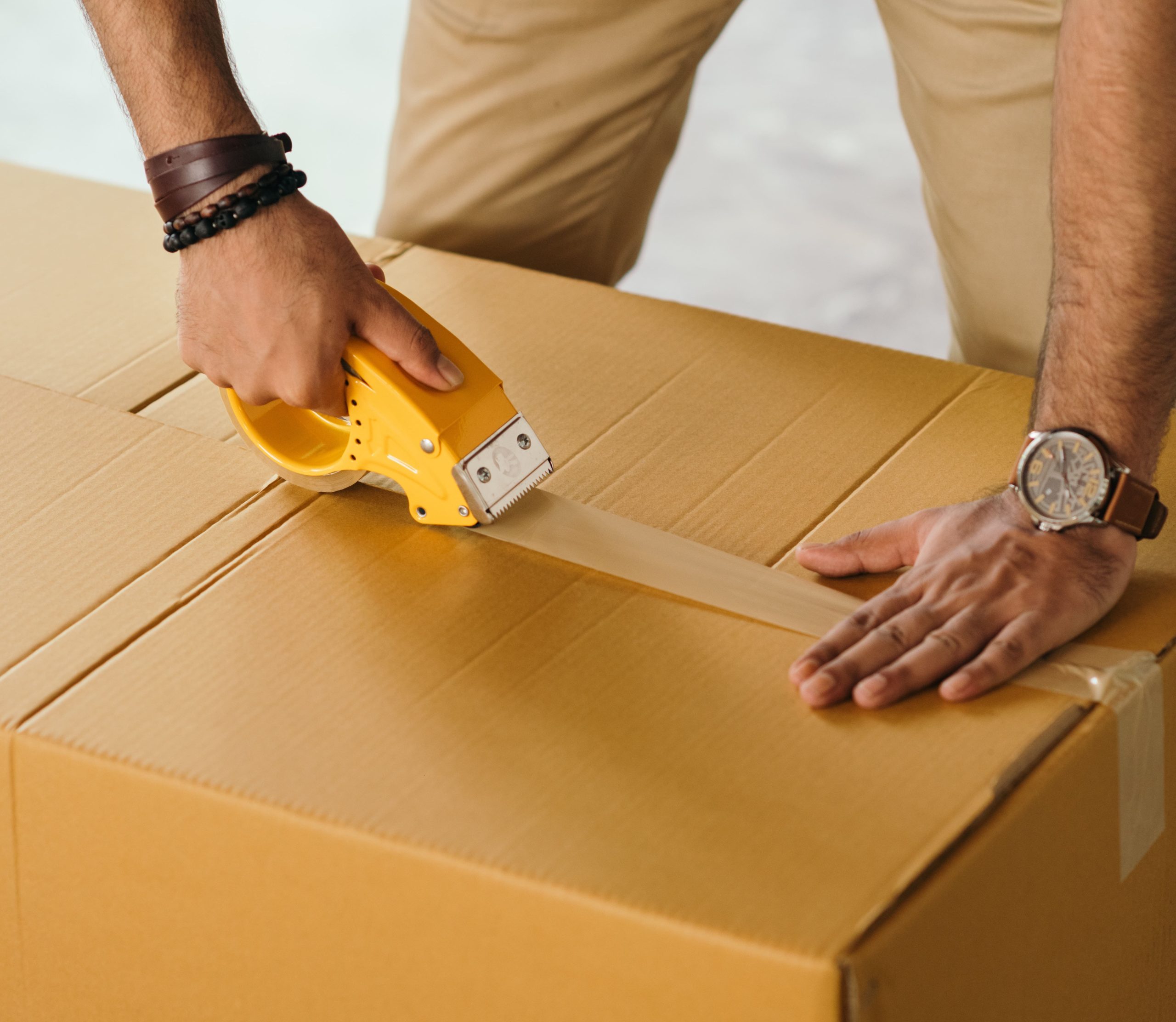
Use the H-tape method: one strip along the center seam and one along each edge on both top and bottom. Tape should be at least 2 inches wide and pressure-sensitive. Duct tape peels under temperature changes. Masking tape doesn’t hold under transit friction.
Include a backup address label inside the box, placed in a plastic bag. Exterior labels get wet, torn, or detached during transit.
Verify it worked: Pull at the flaps after sealing. If they budge at all, add tape.
5. Test packaging for durability
When test units come back, check the boxcondition first, not just the product. A dented or corner-crushed corrugated box on arrival means your protective packaging is already at its stress limit. Look at whether the cushioning compressed evenly. Uneven compression means the product shifted during the pack, putting all impact stress on one side.
Verify it worked: Corner crushing on the box means your corrugated shipping box grade needs to go up before you right-size the next production run.
Proper shipping preparation helps prevent product damage throughout transit. Using sturdy pallets, load bars, edge protectors, and high-quality packing tape improves load stability, distributes weight more evenly, reinforces box seams, and helps prevent shifting, torn edges, and other shipping damage. For strength, 32 ECT corrugated boxes are commonly rated to hold shipments up to 65 pounds, and they perform best when stored between 60°F and 80°F.
Protective Packaging by Product Type: What Actually Works
Different products fail in transit for different reasons. The table below provides specific shipping damage prevention tips and the most common mistakes for each product type.
Product Type
Recommended Packaging
Key Material
Common Mistake to Avoid
Shipping Damage Prevention Tip
Fragile (Glass, Ceramics)
Double-box (inner box inside a larger outer box) or double-wall corrugated box with snug-fit insert
Insulated liner, gel packs for temperature-sensitive items
Relying on the box for structural support.
A rigid inner container sized to the product helps with shipping damage prevention by reducing movement during transit. Add insulation separately if transit exceeds one day.
Electronics (Laptops, Gadgets)
Anti-static bag plus foam insert inside corrugated box
Anti-static bubble wrap or foam, corrugated insert
Using regular bubble wrap instead of anti-static materials. Static discharge damages components without leaving any visible mark.
Seal in an anti-static bag first, then cushion with foam inserts inside the corrugated box. This also covers corrosion risk from moisture during long transit.
Poly mailers for standard items, mailer box for premium or delicate pieces
Tissue paper for presentation, resealable poly mailer
Overpacking. A rigid box for standard apparel adds shipping cost without adding meaningful protection.
Fold garments neatly to reduce wrinkles before wrapping them in tissue paper. Match the poly mailer thickness to garment weight. Lightweight mailers work for t-shirts. Anything structured, like a blazer, needs a thicker mailer box.
Build the insert system around the heaviest item first. Lighter items go around it, each in its own compartment.
Shipping Damage Prevention Best Practices
Fragile: Double-boxing adds cost, but carrier liability for fragile items is limited and often doesn’t cover retail value.
Food: Gel packs typically hold temperature for 24 to 48 hours. If your shipment is crossing multiple zones on ground transit, check your carrier’s average delivery window for those routes before settling on an insulation method.
Electronics: Remove batteries before shipping any battery-powered device. Battery leaks during transit cause corrosion that voids most warranties and complicates damage claims.
Clothing: Poly mailers are resealable, which matters for returns. A customer who can reseal the package cleanly is less likely to report the item as damaged on arrival.
Multiple Items: If the combined weight moves the shipment into a higher rate tier, check whether splitting into two smaller packages is cheaper. Carriers calculate rates per package, and two lighter shipments sometimes cost less than one heavy one.
Choosing the Right Fulfillment Packaging for Your Products
The box type you start with affects everything downstream.
Corrugated Shipping Boxes vs Poly Mailers vs Mailer Boxes
Pick based on what the product needs in transit and how the size and weight affect your shipping rate.
Corrugated shipping boxes: Best for heavy or irregularly shaped products that won’t fit cleanly in a mailer. Size the box as close to the product dimensions as possible.
Poly mailers: Right for soft goods and apparel. A 2.5 mil mailer handles most t-shirts fine, but anything heavier or with embellishments needs at least 4 mil to avoid tears at the seams during sorting.
Mailer boxes: Rigid containers that work as a middle ground for ecommerce fulfillment packaging needing structural support without the bulk of a full corrugated box.
Material Selection and Corrugated Strength
Single-wall corrugated boxes handle most standard e-commerce shipments under 20 lbs. Double-wall for heavier products, fragile items, or anything under sustained stacking pressure. Triple-wall is mostly industrial.
Inserts vs. Fillers
Kraft paper, packing peanuts, and air pillows fill empty space but compress under sustained pressure. Fillers compress. A product in a filler-only package on a long ground transit is less protected on arrival than when it left. A custom corrugated or foam insert holds position regardless of how the package is handled.
Right-sizing the package before choosing between inserts and fillers is a great way to balance protection and cost. A fitted box with a basic insert can often cost less to ship than an oversized one stuffed with void fill.
Packaging Optimization for Dimensional Weight Pricing and Shipping Costs
Dimensional weight (also called dim weight) is how carriers like UPS and FedEx price packages based on the space a package occupies rather than its actual weight alone.
Dimensional weight = (Length x Width x Height in inches) / DIM divisor (139)
Both FedEx and UPS use 139 as the standard divisor for domestic shipments. Whichever is higher between the dim weight result and the actual weight is what gets billed.
Take a 10 x 10 x 10 package. After dividing by 139, the dim weight lands at around 7 lbs. If the product inside weighs 4 lbs., you’re getting billed for 7.
What Changed in 2025
As of August 2025, FedEx and UPS began rounding every fractional inch up to the next whole inch before running the dim weight formula. A box measuring 11.1 inches on one side now gets treated as 12 inches in the calculation. One model estimated the change could add over $32,000 annually for a shipper sending 2,500 monthly packages. If your current box dimensions haven’t been checked against the new rounding rules, that’s a gap worth closing before your next production run.
Why Oversized Boxes Are a Cost Problem
Empty space inside a box costs money in two ways. It raises dimensional weight charges and wastes material. An oversized box with a small product inside gets billed at a higher dim weight than a fitted one, and the extra void fill you add to compensate doesn’t reduce that charge at all.
How to Optimize for Dimensional Weight Charges
Right-size your packaging to avoid unnecessary dimensional weight charges.
Use compact box designs.
Reduce empty space to lower both material use and shipping cost.
Package size has a direct impact on shipping costs. Major carriers introduced dimensional weight pricing in 2015, and the USPS updated its DIM factor from 194 to 166 in 2019, increasing the importance of right-sizing packaging. Using a box that is just 2 inches too large can increase shipping costs by as much as 40%, making efficient package sizing essential for controlling fulfillment expenses.
Packaging for Damage Reduction: What Happens When You File a Claim
UPS and FedEx deny claims when the investigation points to inadequate packaging.
Here’s what carriers look at when a claim gets filed:
Whether the box strength matched the product weight
Whether cushioning depth met carrier minimums
Whether the package arrived sealed
Whether corrosion or moisture damage occurred before the shipment even left your facility because pre-transit damage isn’t covered regardless of how it was packed
What “Inadequate Packaging” Means to a Carrier
Neither UPS nor FedEx provides special handling for packages marked “Fragile.” That label does nothing for a claim.
The one cause most sellers don’t account for: proper storage conditions before shipment. Temperature fluctuations and humidity in warehouse facilities cause corrosion and moisture damage that shows up after delivery but originated before the package left. Sealed inner packaging for moisture-sensitive products is the fix, and it needs to happen at the pack stage, not as an afterthought.
Packaging for Returns: How Fulfillment Packaging Affects Your Bottom Line
Returns cost more than most businesses track. If 5% of 1,000 monthly orders result in damage-related returns at a $35 average order value, that’s $1,750 a month in preventable losses before you factor in return shipping costs, processing labor, and whether the item comes back in sellable condition at all.
The Return Trip Has Its Own Damage Problem
High return rates make returns-ready packaging an important consideration for many ecommerce businesses. When a customer returns a product, it goes back through the same transit conditions as the original shipment, often in worse packaging. If the original package isn’t resealable, the customer repacks it however they can. That means the product arriving back at your facility may have sustained additional damage in transit, turning a sellable return into a write-off.
Resealablefulfillment packaging(mailer boxes with tuck-lock closures, poly mailers with double adhesive strips) helps maintain the same level of protection during the return trip as during the original shipment. The product returns to the way it left, meaning it goes back into stock rather than being written off.
The Cost Math on Returns-Ready Packaging
The difference in cost between a standard mailer and a resealable one is typically under $0.50 per unit. Processing a single damage-related return runs $10 to $20 in labor and shipping costs alone, not counting inventory loss. At any real shipment volume, returns-ready fulfillment packagingpays for itself quickly and reduces write-offs on returned stock.
Shipping Cost Reduction Strategies
A few areas where shipping costs are easier to control than most businesses realize:
Right-size your packages. Reduce excess package dimensions and switch lighter products to poly mailers to cut dimensional weight charges.
Don’t default to one carrier. UPS runs cheaper in shorter zones. FedEx has an edge in zones 5 through 8. USPS First Class often beats both for packages under 1 lb. Running a comparison across your most common shipment profiles at least once a year finds savings most sellers miss.
Distribute your inventory. Stock sitting in a single fulfillment location means longer average shipping distances and higher rates. Splitting inventory across multiple fulfillment points reduces average zone distance and compounds into real savings at scale without changing your packaging.
How to Test Packaging Before Shipping at Scale
Most shipping damage prevention problems surface after a bad returns wave, not before launch. Testing beforehand is how you catch them earlier, when fixes are cheaper.
Internal real-world testing. Ship 10 to 20 units through your actual carrier across different zones. When they arrive, check the box condition and seal integrity first, then the product. The box tells you more about what the package went through than the product does.
Drop testing. Replicates what happens when a package gets thrown onto a conveyor during sorting. A basic version: drop a sealed package from counter height onto a hard floor, hitting each face and corner. Any significant box deformation or product movement means your pack spec needs work.
Compression and vibration testing. Compression simulates stacking weight during storage. Vibration covers road freight, which builds up cumulative damage over distance in a way single-impact drops don’t capture. Running both gives you a more complete picture of what your protective packaging is actually dealing with in transit.
ISTA-certified lab testing. UL Solutions reports ISTA testing can reduce product loss and breakage by up to 30%. Labs run drop, vibration, compression, and temperature simulations against real distribution conditions. For high-quality products or anything going through multiple transfer points, the test report also gives you documented evidence that your packaging meets carrier standards, which matters when a damage claim gets disputed.
Some fulfillment platforms now use technology to track damage rates by SKU and carrier lane, which gives you real-world data on where your packaging is underperforming without needing a lab. That data is worth pulling before committing to a packaging spec at volume.
Shipping Insurance and Risk Management
Carrier liability and shipping insurance aren’t the same thing. Most businesses learn the difference after a claim is denied.
UPS and FedEx include limited liability by default, but the numbers are low. FedEx caps liability at $100 per shipment unless you declare a higher value and pay the additional charge. For fragile items, that ceiling is $1,000 no matter what you declare. UPS Ground Saver dropped its default coverage from $100 to $20 in April 2025, so if you’re on that service and haven’t checked, your shipments are currently carrying almost no coverage.
Claims are most often denied due to improper packaging. That’s the term carriers use when they want to put liability back on the seller. Your box didn’t meet packing standards, so the damage is yours to absorb.
Declared Value vs Full Insurance
Declared value raises the carrier’s liability ceiling, but you still have to prove they caused the damage. Third-party shipping insurance typically skips that requirement. Depending on the policy, it pays out on the retail value of the product without needing proof of carrier fault. Most policies also resolve claims in under 30 days.
Carrier claims typically run 45 to 90 days. The cost for third-party coverage is roughly 1-2% of the declared value per shipment. For businesses shipping fragile or high-value products regularly, run that number against what your average unresolved damage claim costs before deciding.
Common Shipping Mistakes to Avoid
These come up repeatedly across product types and order volumes.
Oversized box for lightweight products. Empty space inside creates movement and raises the dim weight pricing. Right-sizing addresses both problems at once.
Wrong material for what’s inside. Poly mailers for rigid or breakable products. Single-wall corrugated boxes for heavy items. Loose fill for anything requiring a fixed position. The material selection has to start with the product, not the price per unit.
Skipping the bottom cushioning layer. Sellers fill around the sides and top but leave the base thin. The bottom of the package absorbs impact, vibration, and stacking loads throughout transit, making adequate bottom cushioning equally important.
Incomplete sealing. One strip of tape down the center seam isn’t enough. A package that opens mid-transit voids most carrier liability claims and exposes the product to additional handling damage before anyone notices. To avoid this, use H-tape sealing on all edges and seams.
Skipping pre-scale testing. Packaging that holds at 50 orders can fail at 500. Seal integrity under heat, cushioning compression on longer routes, and corrugated box wall performance under sustained stacking weight are things that only show up at volume. So before scaling production, test packaging at small volumes first.
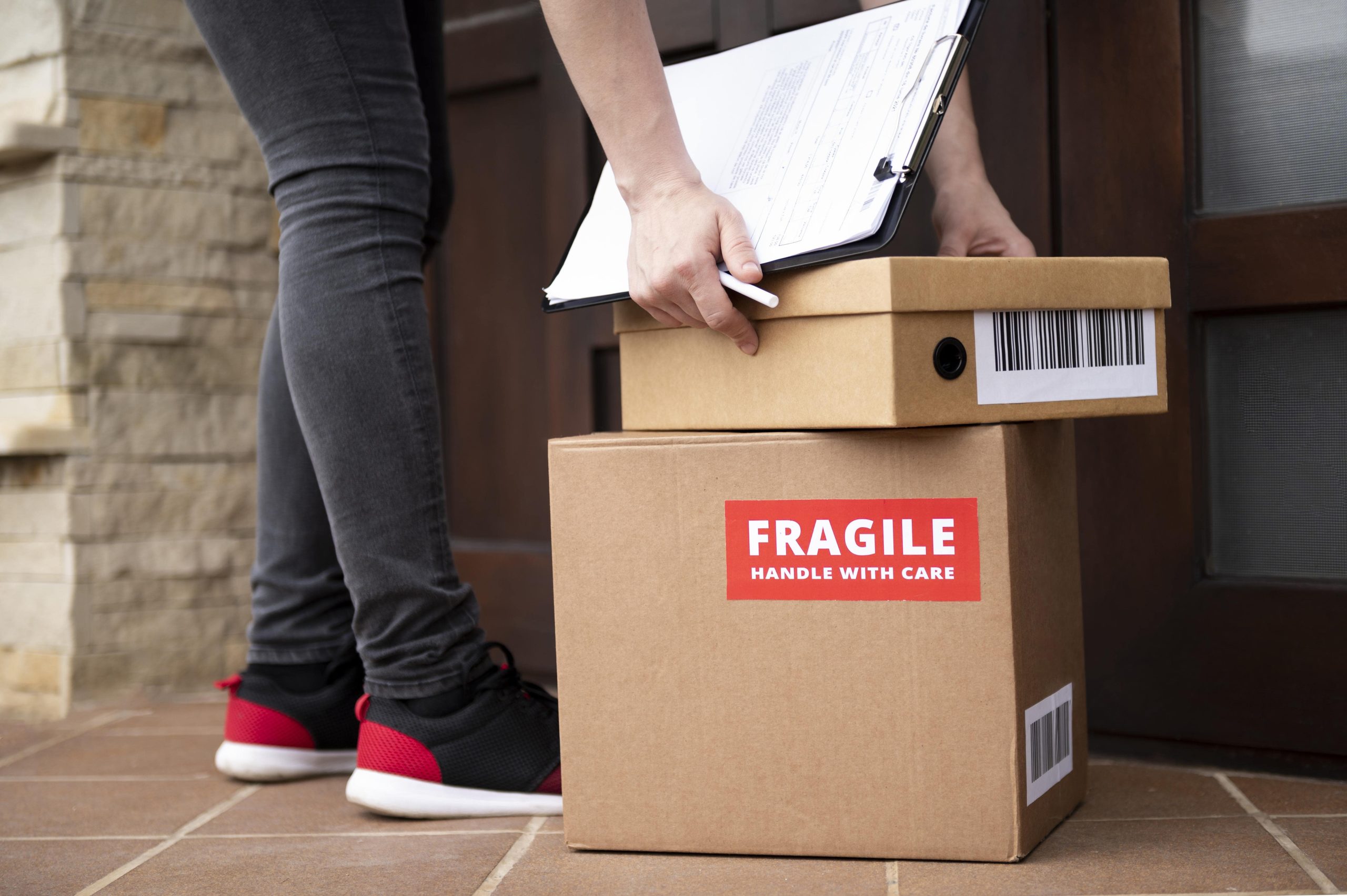
Relying on “Fragile” labels for protective packaging. UPS and FedEx don’t provide special handling for marked packages. For shipping damage prevention, it’s important to have a properly built package.
Quick Reference: Shipping Checklist
Match box strength to product weight (check ECT rating on bottom flap).
Right-size the box to minimize empty space and dim weight charges.
Layer cushioning on the bottom first, then the sides, then the top.
Use double-wall corrugated boxes for fragile or high-value items.
Seal with pressure-sensitive tape in an H pattern, top and bottom.
Include a duplicate address label inside the package.
Test 10-20 units before scaling, and check the box condition on arrival, not just the product.
Shipping-Ready Packaging Solutions with Refine Packaging
A beautiful box that arrives crushed is worse than a plain one that arrives intact. That’s the framing behind everything Refine Packaging builds: structure first, appearance second.
More Than a Printer
Most suppliers will print whatever spec you send them. Refine Packaging’s team focuses on the structural side: getting the corrugated box grade right for the product weight, selecting cushioning that holds its position during transit, and building custom inserts that protect the product, regardless of how the package is handled between your facility and the customer’s door. For returns, Refine Packaging also considers resealable designs and customer-friendly formats that make it easier to send products back.
Custom Inserts and Box Strength Selection
Off-the-shelf packaging rarely accounts for how a specific product sits, shifts, or absorbs impact. Custom inserts eliminate movement at the source. Correct corrugated shipping box strength selection means the walls hold under real stacking and transit pressure, not just in ideal conditions. These are the details that determine whether a high-quality product arrives as one.
Start With a Sample
Before committing to a full production run, Refine Packaging works with you to test the protective packaging spec against actual transit conditions. A sample run catches structural issues early when fixes are cheap, instead of at scale when they’re not.
Tell us what you’re shipping, and we’ll engineer fulfillment packaging to protect it. Get a free quote now.
Conclusion
Shipping damage prevention comes down to decisions made before the package leaves your facility. Box grade, cushioning depth, material selection, and how well the fulfillment packaging holds up across different product types determine whether your customers receive what they ordered or file a return.
The businesses that get this right spend less on replacements, fewer write-offs on returned stock, and have damage claim data that actually holds up with carriers. Good protective packaging isn’t a premium. Over time, it’s what you save by not absorbing preventable losses. Working with packaging experts can help ensure materials and designs are optimized for protection and cost efficiency.
FAQ
How much cushioning does a shipping box need?
For standard products, a minimum of ½ to ¾ inch of cushioning on all sides. The bottom layer matters as much as the sides.
Does dimensional weight apply to all shipments?
FedEx and UPS apply dimensional weight pricing to all domestic packages with no minimum size threshold. USPS only applies the dim weight to packages exceeding 1 cubic foot. If your package is light but large, dim weight almost certainly applies and is probably what’s driving your rate up.
What’s the most effective shipping damage prevention method?
Shipping damage prevention starts with the corrugated box grade, not the cushioning. If the walls can’t handle stacking pressure, fill material won’t compensate. From there: eliminate empty space, match protective packaging to the product type, and test before scaling. Most shipping damage prevention failures trace back to one of those three things being skipped.
Erica is a professional writer and brand strategist at Refine Packaging who is based in Denver, Colorado. With a background in writing and journalism, Erica entered the manufacturing industry 8 years ago to deepen her passion to demystify difficult packaging concepts. With years of in-the-field printing experience, Erica is uniquely suited to help unpack the custom packaging process for beginners looking for an impactful box style that resonates with their target audience. When she’s not writing, Erica can be found with her nose in a fantasy novel or climbing The Rocky Mountains (and sometimes, doing both at the same time).








 Amanda Jane Rivera

 Asif Muhammad

 Alex Jasin

 Erica Campbell



.svg)
Share