How do you know if a custom packaging manufacturer is reliable? They test every packaging design and material before mass production.
At Refine Packaging, for instance, we first manufacture a small sample batch after receiving customized packaging specifications. We then test custom packaging samples for strength, quality, and compliance before proceeding to actual production. Doing this avoids product damage, returns, and tarnished brand impact due to faulty or ineffective packaging.
In this guide, we help you understand why packaging testing is important and how to work with manufacturers to make sure it is conducted properly.
Why Packaging Testing Matters
In design and production, prototype testing is a necessary step to identify flaws or potential for improvement before bulk manufacturing. The same goes for packaging. While some may consider this unnecessary, packaging testing is very important. It helps:
Prevent damage during shipping. Packaging testing helps ensure that box dimensions, actual weight, functionality, and other factors are accurate.
Ensure consistent quality across production. Identifying packaging weaknesses before large quantities are produced allows customers and manufacturers to correct faulty designs and ensure consistency in quality and product protection.
Meet industry and regulatory requirements. Most industries have strict regulatory standards to ensure safety and sustainability. Packaging testing ensures companies adhere to these standards and provides evidence that packaging meets the requirements to keep your products safe.
Reduce long-term costs due to returns, replacements, and other packaging-related issues. Poorly packaged goods contribute to about65% of cargo damage claims. Testing minimizes this by ensuring that packaging can withstand different shipping and storage conditions. This prevents product returns, customer complaints, and payment refunds.
Types of Packaging Testing (Overview)
While some may think packaging testing is simply checking whether a box can withstand rough handling, the process is actually quite complex and involves several types of tests.
Structural strength testing. Can your packaging hold up through stacking, cargo packing, freight shipping, and shifting while in transit? This test checks if it’s strong enough for shipping and storage conditions.
Material quality testing. Are the paper, plastic, or other medium you’re using suitable for your products? This tests if the materials used for packaging are safe and durable.
Environmental testing. This examines how packaging reacts when exposed to different environmental conditions, such as sunlight and rain.
Compliance and regulatory checks. These inspections ensure packaging meets the standards and safety requirements needed to confirm the packaging is safe to use. These checks help brands avoid potential fines for not meeting regulatory requirements.
Box Strength Testing Methods
These physical or mechanical tests may reveal when extra cushioning is required, box flaps stay closed, or changes in thickness and dimensions are needed.
Drop Test. This simulates real-world shipping conditions. Testers imitate potential mishandling that packages may undergo during transportation. The packaging is filled, then dropped from a height at different angles to see if it can withstand impact and protect its contents.
Box Compression Test (BCT). This strength test method measures how much weight a box can withstand when stacked. Testers apply increasing weight to know how much weight the packaging can bear without being crushed.
Edge Crush Test (ECT). Used specifically on corrugated boxes, this assesses their stacking strength. Pressure is applied to the box until it breaks to determine whether additional materials are needed to reinforce it. When using UPS as a carrier, note that small packages weighing less than 30 lbs must have anECT of 32 lbs per inch.
Vibration Test. This simulates movement during transport on the road, air, or sea. The packaging is placed on a table and tested with vibrations of various intensities to see whether it cushions products or it might loosen and break during transportation.
Material Quality Testing
Is the material you’re using strong enough to resist tearing, puncturing, moisture, and other conditions the packaging may face during transportation and storage? Is it suitable for the product you’ll be using it for? These are some of the factors that material quality testing checks.
The process focuses on the durability of corrugated, paperboard, kraft, and other materials used in packaging. It ensures every batch manufactured is consistently reliable at protecting products.
Environmental Testing
Handling by FedEx and other shipping companies isn’t the only condition that may damage product packaging. Humidity, extreme heat, temperature changes, and other conditions also affect packaging and the products inside it.
In environmental testing, materials undergo a series of tests for moisture and heat resistance, evaluating their performance in extreme environmental conditions. These tests align with industry standards such as ASTM D4332, ASTM E171, and ISTA 3A, which define practices and specifications for conditioning and testing.
Packaging Compliance & Standards
One common mistake in packaging design is focusing solely on the box size and dimensional weight. While external dimensions, internal dimensions, and cubic size may matter, complying with industry standards is even more important.
Why Compliance Matters
It’s important to comply with packaging standards to avoid legal problems and shipping delays.
Following relevant packaging regulations ensures that products are safely packed, reducing the risk of fines, damaged or contaminated products, and rejected packages. Compliance also makes it easier for products to be accepted by retailers and carriers without any problems.
Common Standards to Know
Shipping carrier guidelines (e.g., dim weight and stacking limits)
Carriers have their own packaging guidelines. For example, FedEx requires chipboard boxes to be packed into an outer box made of corrugated fiberboard. The chargeable weight also depends on whichever is greater between the actual product weight and the dimensional weight. Here’s a quick comparison of the packaging guidelines of the three major carriers:
Shipping requirements are mostly focused on the space a package occupies and its dim weight pricing. Aside from this, businesses must also comply with packaging guidelines specific to their industry.
For instance, the FDArequires cosmetic products sold at retail to be packaged in tamper-resistant packaging, such as boxes with shrink or tape seals, blister packs, tubes with breakable caps, or aerosol containers.
The agency has even stricterregulations on packaging for food. Some food contact substances they prohibit are phthalates, per- and polyfluorinated substances (PFAS), and bisphenol A (BPA).
When Compliance Is Critical
The importance of complying with packaging standards goes beyond protecting products and reducing shipping costs. Compliance also has legal, health, and sanitary implications. It’s all the more critical when it comes to food, cosmetics, and other substances and fragile goods.
Food packaging. Products meant for consumption must have sturdy packaging that protects them from contamination or spoilage. Materials used for the packaging must also be devoid of dangerous or potentially harmful substances, especially if the packaging comes into direct contact with food.
Cosmetic packaging. Facial cleansers, oral hygiene items, makeup, and other cosmetic products come into contact with our skin. Many also contain ingredients that may react with other substances. This is why cosmetic packaging must adhere to similar stringent standards as food packaging.
International shipping. Different countries have their own regulations and requirements for products and packaging, so complying with these rules helps to ensure that packages can be transported and delivered without any fines or rejections.
Box Dimensions and Shipping Considerations
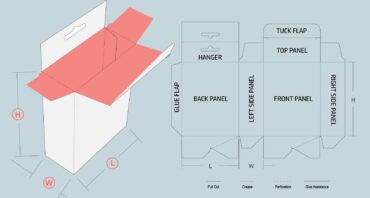
Box sizes are categorized by their Length × Width × Height (L × W × H) dimensions, with common small boxes measuring 6 × 6 × 6 or 8 × 6 × 4 inches, medium boxes around 12 × 12 × 6 or 12 × 12 × 8 inches, large boxes approximately 18 × 14 × 12 or 20 × 20 × 15 inches, and extra-large boxes exceeding 24 × 18 × 18 inches. For the best fit and product protection, measure all sides accurately, record dimensions in the standard order, allow an additional 0.5 to 1 inch for cushioning materials, and include ⅛ to ¼ inch of clearance between the product and packaging.
Dimensional weight is calculated by dividing a package’s volume by a carrier-specific DIM factor, with carriers such as FedEx and UPS using different formulas to determine billable weight. Shipping charges are based on a package’s external dimensions, which do not account for box material thickness, and the USPS applies dimensional weight pricing to packages larger than 1,728 cubic inches.
For larger shipments, standard dry shipping containers typically measure 8 feet wide, 8.5 feet high, and are available in 20-foot and 40-foot lengths.
Sample Testing Before Mass Production
Packaging testing is typically done in phases. In each phase, a different sample type is used, and different factors are tested.
Types of Samples
Structural samples. A structural sample is the original, undesigned version of the packaging. It’s used to determine whether the shape, size (length, width, depth, volume, etc.), and durability are adequate. The measurements help identify which materials are suitable for the packaging and check if the product fits properly.
Printed samples. Once the right size is approved, a new batch of samples is printed with the custom digital design. Printed samples are then examined, particularly if colors, texts, and other graphic elements are printed properly onto the packaging and if the overall design reflects the brand identity.
Pre-production samples. These are the pilot prototypes made using the actual materials and complete manufacturing process. Only when the samples pass all required packaging tests does the manufacturer proceed with mass production.
What to Test in Samples
Fit and dimensions. Check whether the exterior and interior dimensions, shape, and overall box size of the packaging match the product dimensions. The product must fit securely inside and have enough cushioning for impact protection.
Print quality. Look for printing errors that need to be corrected before mass production. Make sure colors, texts, and images are clear and properly aligned.
Strength and durability. Request your manufacturer to calculate BCT, ECT, and other strength test metrics to ensure the packaging can withstand normal to extreme conditions during handling, storage, and transport.
Best Practices
Choose a reliable packaging manufacturer. Manufacturers that have years of experience in your industry are familiar with the standards you have to comply. They can advise on which materials to use and what dim factors to consider.
Test with the actual product inside. Testing the packaging with the actual product helps to confirm that the product fits properly, stays protected, and will not be damaged during transportation. Some issues that would not have been seen by testing when the packaging is empty may also be revealed, so adjustments can be made before mass production starts.
Simulate real shipping conditions. Find weaknesses in the packaging design by testing samples under different transportation and environmental conditions. If shipping products by air, pressure test the product packaging and outer boxes. If shipping by sea, you’d need to check how the material handles humidity.
Common Packaging Failures (and How to Avoid Them)
Boxes collapsing during stacking
If your packaging is collapsing during stacking, it means that the material being used isn’t strong enough to handle the weight on top of it. To fix this issue, use sturdier materials and design boxes that distribute the weight more evenly. Also, conduct compression testing before mass production to verify that the box can hold under pressure.
Poor fit causing product movement
If the product is too loose inside the packaging, it can easily move around and get damaged during transportation. Adjusting the size of the packaging, using inserts, or adding cushioning materials like foam can help keep the product in place.
Weak materials for heavy products
Light materials can tear and break easily when heavy products are placed inside. To fix this, replacing the packaging with more durable materials will help to ensure that the packaging will not break and will safely hold the product.
Print damage during handling
It’s easy for designs to get faded or scratched off from handling and storage. In order to prevent this, use lasting printing techniques or secondary packaging to protect the primary packaging.
How to Create a Packaging Testing Checklist
1. Define box dimensions and product requirements.
What product will you be using the packaging for? What are the inside dimensions that would fit the product securely? Do you need additional cushioning or inserts? Will the box need to be reinforced for heavy loads?
2. Identify dimensional weight factors and other risks.
Identify risks that may affect durability during handling and shipping. How heavy is the product? Is it fragile or heat-sensitive? How far does it need to be shipped?
3. Select the appropriate tests.
Choose the tests and tools that match the risks, like drop tests or vibration testing, to ensure that the packaging is sturdy enough for the product.
4. Approve the right size only after passing all checks.
Only approve the packaging once it has passed all the tests to ensure that it is reliable and secure.
Packaging Testing & Quality Assurance with Refine Packaging
Worried about sourcing sturdy, dependable packaging? Don’t know which tests to use to check your boxes? Here at Refine Packaging, we make it simple for you.
Structural Testing Expertise
Refine Packaging designs packaging for real-world shipping conditions. All boxes and bags can be tailored to your brand’s needs. With our expertise in structural testing, we can provide guidance on ECT, compression requirements, and other box strength factors.
Sample Validation Process
Structural and printed samples are available before production. We send these for clients to check and test, so we can identify and fix issues before the entire order is manufactured.
Material Quality Assurance
Our commitment to quality assures clients that we remain consistent in material sourcing and production standards. All our packaging products are tailored to specific business needs and guaranteed to be durable.
Compliance Support
If you’re struggling with different industry requirements for packaging, Refine Packaging is here to help. We provide support for different shipping and industry requirements for businesses that are struggling to comply with various rules.
End-to-End Packaging Support
Ensure that your packaging performs well by choosing Refine Packaging. We provide reliable support, from the design stage to final production, ensuring that your packaging truly serves its purpose without any issues.
Need advice to make sure that your packaging is ready for shipping and storage? Refine Packaging is always here to help you. We provide advice on packaging strength and durability, and ensure that your packaging meets quality and compliance requirements to prevent potential fines or returns.
Step-by-Step: How to Test Your Custom Packaging
Now that you have an idea of why packaging testing is important and how it’s done, you can do a simple test on your packaging design.
Define your packaging requirements. Decide on the packaging requirements, such as size, shape, color, and materials.
Conduct drop and compression tests. Conduct drop and compression tests in order to test if the packaging is durable.
Test with the actual product. Test the packaging with the actual product inside to ensure that the packaging will keep the product secure.
Evaluate results and refine. If any issues are found during the testing process, refine the packaging and test it again.
Approve for mass production. Once the packaging is confirmed to be durable and secure, approve the final packaging for mass production.
Conclusion
Packaging testing may take time and money, but it is essential to avoid costly packaging failures that may lead to non-compliance, product damage, and dissatisfied customers. Most manufacturers recommend the process and advise that strength, quality, and compliance all be validated.
Companies that often use shipping boxes, luxury packaging, and mailers would benefit greatly from packaging testing. To ensure all factors are validated, work with experienced packaging partners, such as Refine Packaging.
Asif Muhammad is a Co-Founder and Partner at the custom packaging box company, Refine Packaging. Recognized as a recommended packaging firm by Shopify and 99designs, thousands of companies nationwide choose Refine Packaging for their custom boxes and wholesale product packaging needs – including T-Mobile, Adidas, MetLife, Pandora, and Marriott Hotels. Asif’s leadership in the manufacturing industry stems from a mission to make the custom packaging process easier for businesses of all sizes. With 10+ years of packaging and engineering experience, Asif is uniquely suited to help companies think outside the box to create memorable retail packaging.






 Alex Jasin

 Asif Muhammad


 Erica Campbell

.svg)
Share