Still think packaging is just for protection? Think again.
Packaging can be an impactful marketing tool that enhances brand recognition — especially when it’s printed with designs that embody the brand’s image. Getting custom boxes with high-quality printing is an investment that consistently yields high returns in the long run.
Like other business investments, this requires careful planning. One aspect that requires consideration is deciding which among the different packaging printing techniques aligns with your packaging needs, because the printing method you select can impact cost, quality, and scalability,
Make your decision process smoother with this guide. We start by understanding the different packaging printing methods and tools, then explore the factors to consider when choosing the right technique.
Overview: Types of Packaging Printing Techniques
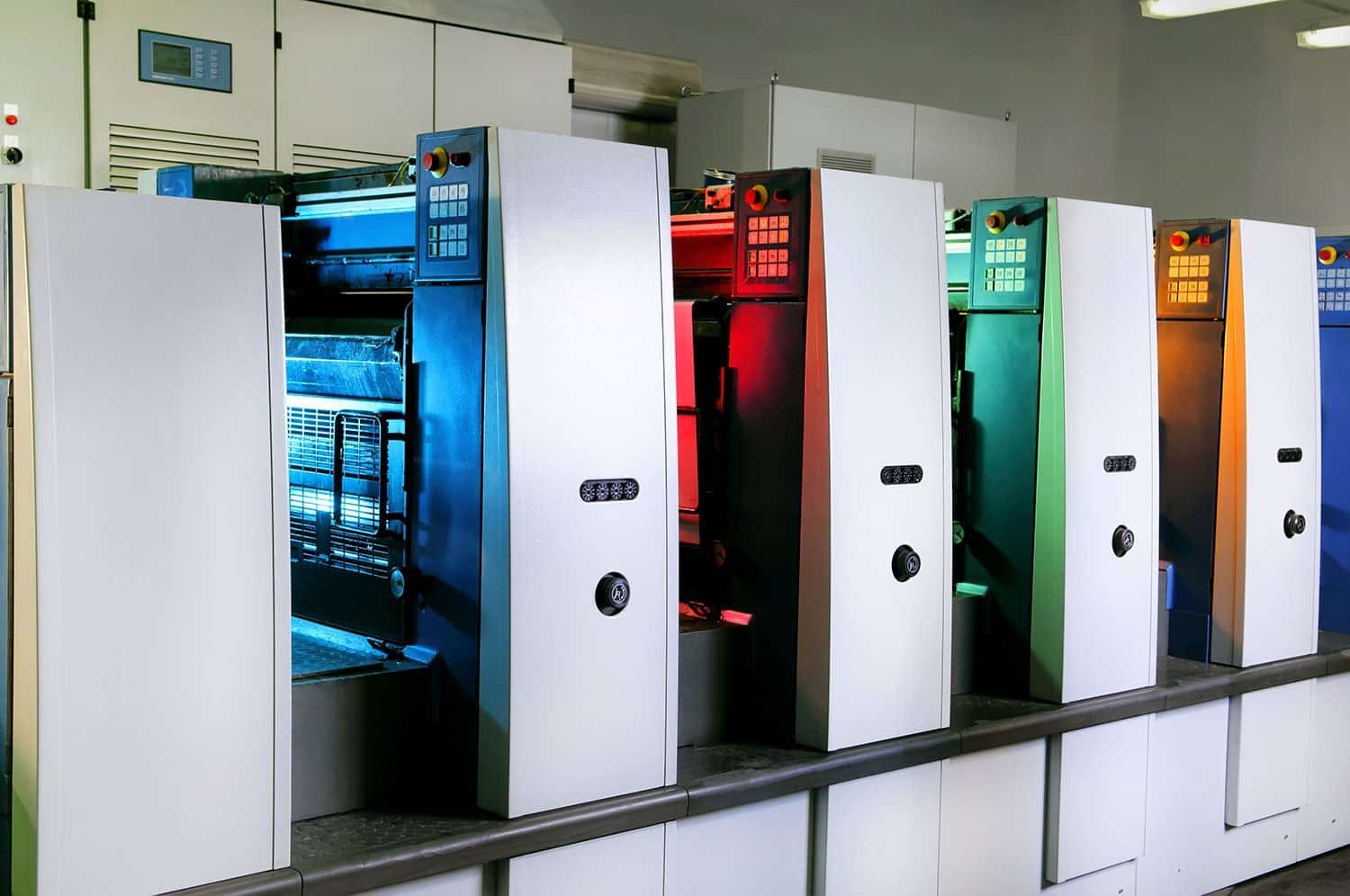
Packaging printing is not always as simple as using a laser printer on photo paper. There are several printing methods and equipment available, each with its own advantages and disadvantages. The three most commonly used today are:
Digital printing
Digital printing uses printers to transfer digital designs onto various materials without using traditional printing plates. Since it does not require plate materials and ink rollers, this is a fairly fast method that works well for on-demand printing.
Offset printing
Also called lithography printing, this traditional print method uses lithographic plates to transfer designs onto rubber blankets, which are then used to transfer ink onto the print surface.
Flexographic (flexo) printing
Flexographic printing uses rubber or photopolymer plates to apply ink onto different materials. Each color is spread onto the printing surface in layers, using CMYK schemes.
When does the printing method become critical?
With all of these printing methods available, how do you know which one suits your packaging the best? The choice depends on many factors unique to your needs, including the volume, material, and timeline you require.
If you only need a small quantity of prints, digital printing is often the best choice because it can be done quickly and doesn’t require that many things to set up. However, if you need a larger amount, offset or flexo printing may be a better option because the cost per print lessens as the quantity of prints increases.
Your material also affects the best printing method to choose, since different methods work better on different materials. Digital printing typically works well for paper, and flexographic printing is best for foil, labels, and flexible materials.
Lastly, if the prints are needed urgently, digital printing is the best choice because it needs little to no setup. Both flexographic and offset lithography need plates and printing cylinders to be prepared before the printing process starts. Thus, they take longer than digital printing.
Offset printing is commonly used for high-volume products such as custom boxes, magazines and brochures, while digital printing relies primarily on CMYK color blends, uses fewer materials, and typically features more environmentally friendly inks, although it can be less effective at reproducing specialty colors. Flexographic printing offers additional versatility by supporting water-based, solvent-based, and UV inks for a wide range of packaging applications.
Digital Printing: The Fast & Flexible Option
How the Digital Printing Process Works
Digital printing is a direct-to-surface method without metal plates. It transfers designs from digital files onto packaging materials through a printer. Aside from inkjet technology, other printer types used for this method include laser, dye-sublimation, and digital press.
Best Use Cases
Since it doesn’t require plates or other printing press equipment to set up, digital printing is ideal for low-volume print jobs, urgent packaging needs, and inserts. Brands can easily order small amounts of prints or adjust designs much faster than traditional printing methods, such as offset printing. Most of the time, simple designs on stock packaging take only a week to manufacture and deliver.
Use digital printing for:
Low MOQ orders
Short runs and quick turnaround
Prototyping and sampling
Pros
Fast setup. All it needs is a computer and a printer.
No plate costs. No need to make and prepare printing plate cylinders.
Ideal for customization. Any digital image can be used, and designs can be easily changed or updated.
Cons
Higher cost per unit at scale. Digital printers use ink cartridges that may be more expensive on a per-page basis than ink tanks that offset presses use.
Limited benefits for very large runs. Even if it’s faster than other printing methods, the cost per print stays the same no matter how many prints are produced. Image quality may also diminish in high-volume print jobs.
Offset Printing: High-Quality & Scalable
How Offset Printing Works
In offset printing, images are separated into CMYK or other standard printing colors and etched into thin aluminum plates, which are wrapped around rotating cylinders. Inked images from these metal plates are transferred or offset onto rubber flexible printing plates. Packaging materials pass between the rubber plates and impression rollers, which ensure ink is pressed evenly for consistent quality.
Best Use Cases
Offset printing can be a cost-effective solution for large orders because the cost per print decreases as the quantity increases. Offset printing also uses plates, which can efficiently produce thousands of copies without degrading quality.
Use offset printing for:
high-volume production
premium packaging
Pros
Consistent, high-quality output. The use of rubber blankets and impression cylinders creates clear lines, sharp texts, and crisp images.
Lower cost per unit at large volumes. Once the initial plates are etched, they can print tens of thousands of copies.
Cons
Higher setup cost. Offset printing requires custom plates to be made for different colors, so it will not be cost-effective for small amounts of printing.
Longer lead time. Offset printing has a longer lead time since it needs extensive setup. Custom metal cylinder with engraved cells for every color – or even disposable plates – take time to create and test for accuracy.
Flexographic printing is quite similar to web offset printing, but instead of rigid plates, it uses flexible photopolymer plates. It also uses multiple rotating cylinders and UV curable inks to transfer high-quality images onto non-porous substrates. This makes it ideal for printing on flexible packaging materials, such as foil, thin plastic, and corrugated board.
The process starts with the fountain roller picking up energy-curable ink from the ink pan. The ink is then transferred to an anilox roller with finely engraved cells, where ink volume is measured for uniform thickness. An optional doctor blade scrapes off excess ink.
The anilox rolls against the polymer plate cylinder to transfer the print. The packaging material then passes between the polymer and impression cylinders for direct printing.
Best Use Cases
Flexo printing is recommended for packaging materials with uneven and non-porous surfaces, such as plastic bags, labels, and wrappers used in food packaging. It’s also ideal for large-scale industrial runs, as it offers a lower per-unit cost for large print jobs.
Use flexo printing for:
Corrugated packaging
Large-scale industrial runs
Pros
Extremely fast production. Rotary printing is fast and continuous, plus UV inks dry quickly.
Cost-efficient for very large volumes. Plates are reusable and seldom need replacement, reducing the cost per unit in the long run.
Cons
Limited detail compared to offset. The rubber blanket used in offset creates sharper, more detailed images compared with photopolymer cylinders.
Setup complexity. Multiple moving cylinders and flexible plates must be prepared and aligned for accurate printing.
Digital vs Offset vs Flexo: Key Comparison Factors
Cost per unit. Offset and flexographic printing are both cost-efficient for larger print volumes, while digital printing is better suited for smaller batches.
Setup cost. Digital printing doesn’t require much setup because it simply uses a printer to apply ink to the printing material, while offset and flexographic printing may cost more to set up since they both use customized plates.
Print quality. Offset printing typically has the best print quality among these three printing methods. Flexographic printing also produces high-quality prints on a variety of materials but usually lacks detail, while digital printing uses toner, which may be less clear than offset printing.
Production speed. Flexographic printing is the fastest since it uses rotary printing. Offset printing is in the middle, and digital printing is the slowest but provides the fastest setup time.
Substrate. Flexo is the most versatile as it can print on almost any surface, including uneven, smooth, and non-porous materials.
Quick Comparison Table: Digital vs Offset vs Flexo
To help you compare them more easily, here’s a side-by-side breakdown of all three methods:
Features
Digital
Offset
Flexo
Plates
none
solid sheets
flexible photopolymer
Ink type
dry toner or liquid ink
oil-based or water-based ink (high viscosity)
fast-drying, UV curable ink (low viscosity)
Setup
low
complex
complex
Printing materials
thin paper, light cardstock
smooth carton board, board paper
plastic, foil, corrugated boards
Print quality
Good
(complex digital images)
Exceptionally High
(fine gradients, sharp details)
Good
(solid colors, bold text)
Production time
Fast setup, moderate print speed
Long setup time, fast print speed
Long setup time, extremely fast print speed
Cost
Low setup, High per-unit cost
High setup, Low per-unit cost
High setup, Low per-unit cost
How to Choose the Right Printing Method
Based on Order Volume
1. Low volume → digital
Go digital if you require only a small batch of printed packaging. It requires minimal setup and can also be used on coated papers at a more budget-friendly cost than traditional printing methods.
2. Medium to high volume → offset
A digital printing press may be fast, but the cost per unit stays the same regardless of quantity. For medium to high print volumes, offset printing is more cost-effective. Once the plates are set up, they can be used on tens of thousands of prints.
3. Very large scale → flexo
Flexo is like a stamp on steroids. It’s fast and efficient, making it a good choice for very large volumes that do not require ultrafine details. Like offset, the cost per unit decreases as the number of prints increases.
Based on Packaging Type
1. Folding cartons → offset or digital
Offset is the most commonly used method for folding cartons in the packaging printing industry. It balances cost and quality, especially for large print jobs. Digital printing is also a good option when designs have intricate details.
2. Corrugated boxes → flexo or digital
For corrugated boxes, flexo is often recommended. The flexible polymer plates can handle rough and uneven surfaces well. Digital printing may also work, but would be better used on other materials that are thinner and smoother.
Based on Budget & Timeline
1. Fast turnaround → digital
If you require fast production, digital printing is an excellent choice, as it requires less setup than traditional printing methods. It’s a great option for shopping bags intended for seasonal promos.
2. Cost efficiency at scale → offset or flexo
If you anticipate several large orders, it’s more cost-efficient to choose offset or flexographic printing rather than digital printing. Although there is a high initial cost for setup, long-term costs will be much lower than those of digital printing.
Common Mistakes to Avoid
1. Choosing digital for large-scale production
Digital printing produces output more slowly for large orders compared with other printing methods. Even if a digital printing press is larger than your home printer, it works pretty much the same. Plus, the cost per print will also be higher for bulk orders.
2. Overpaying for offset on small runs or on-demand printing
Offset printing can be expensive because plates have to be custom-made and inks tested. If you only need a few hundred packages printed, you may end up losing money. For small runs, consider using digital printing instead.
3. Ignoring material compatibility
The wrong printing method may result in bad print quality and wasted materials, leading to financial losses. If the printing method used is not compatible with the material you choose, end products may be flawed with smudging, weak adhesion, fading, and other issues.
4. Not considering long-term scalability
While some printing methods may be beneficial for smaller orders, they might be inefficient or expensive for larger print volumes.
How Printing Method Impacts Branding
1. Print quality and color accuracy
Vibrant and high-quality prints can make your packaging appear more professional and help ensure your brand identity is reflected accurately and consistently across all batches of packaging produced.
2. Ability to use premium finishes
The printing method you choose affects your branding since it determines which types of finishes can be used. These premium finishes make printed materials look more elegant, effectively grabbing customer attention.
3. Consistency of print jobs across production batches
Consistent designs and quality will make your brand seem reliable whenever customers look at your packaging.
Packaging Printing Solutions with Refine Packaging
Refine Packaging offers multiple printing options. We offer a combination of digital printing for fast production and small orders, offset printing for high-quality prints and large-scale production, and flexographic printing for corrugated and bulk packaging.
1. Expert Recommendations Based on Your Needs
With expertise built over years of experience in the printing industry, we can confidently guide brands in choosing the right printing method for their packaging needs. We optimize packaging solutions for cost, quality, and production speed.
2. High-Quality Print Results
Our packaging and digital printing excels in material and print quality. We use only premium materials and modern equipment to produce custom packaging for retail and e-commerce needs. Every print comes out with vibrant colors and sharp designs.
3. Integrated Finishing & Production
We are the one-stop shop for many brands with variable data printing needs. We offer end-to-end packaging solutions, from printing to finishing, to make the production process easier for your brand.
4. Sampling & Proofing
We provide printed samples before mass production to ensure your packaging is accurate, high-quality, and captures your brand identity.
We’re here to help with all of your packaging and printing needs. Request the specifications you need for your custom packaging printing, get advice on the best printing method for your brand, and receive a sample for you to test your packaging. Once satisfied, we go into full production and deliver according to the timeline you set.
Step-by-Step: Choosing Your Printing Method
Can screen printing suffice, or should you go all in on gravure printing? Will flexo be better than offset? Here’s a guide to choosing the right printing method for your packaging needs.
Define packaging requirements. Determine what your brand needs for your packaging. Decide on the design, colors, and size of the needed print.
Determine order volume. Decide how many prints you need. This will largely help you determine what kind of printing method will work best for you.
Evaluate budget and timeline. Evaluate how much you’re willing to spend as well as your timeline. Decide if you need your prints quickly or if a longer setup time is okay.
Select printing method. Based on your budget, time constraints, packaging requirements, and order volume, select your preferred printing method.
Test with samples. Test your packaging with samples to ensure that the color, detail, and positioning are correct.
Proceed to production. Once the packaging is confirmed to be accurate, proceed to mass production.
Refine your printing choices
There’s no single printing method that fits all packaging needs. To find the right one, you must consider several factors, including your product type, volume needs, cost limitations, and quality goals. Avoid costly mistakes by consulting experts before making a decision.
Here at Refine Packaging, we’re always willing to provide our expertise to ensure your packaging looks perfect without skewing your budget. Schedule a consultation today to explore packaging printing solutions customized to your brand requirements and to get a free quote.
Amanda is a professional writer and brand strategist at Refine Packaging who is based in Los Angeles, California. With a background in writing and journalism, Amanda entered the manufacturing industry 6 years ago to explore her unique passion for beautifully conceptualized packaging. With years of packaging experience, Amanda has a deep understanding about how brand psychology and box design trends impact emotions and desired actions. When she’s not writing, Amanda can be found snuggling her two Beagles or outdoors sipping on sparkling white wine.







 Alex Jasin
 Asif Muhammad
 Erica Campbell

.svg)
Share